After sunset, electricity demand may continue at a workshop, hotel or other remote facility. A battery can shift some daytime generation into later hours, but its available charge changes as the load continues. In solar and diesel microgrids, commercial energy storage systems operate within that changing relationship between production and demand. The central task is coordinating which source supplies the load, which source restores the battery and when another supply must take over.
Tracing the Path from Solar Generation to the Load
Solar electricity enters a DC-coupled arrangement through the DC side before conversion for AC loads. External maximum power point tracking controllers manage the PV input, and the power conversion system provides the relevant conversion between the DC and AC sides. The battery connects stored energy to this arrangement, making generation available beyond the instant when sunlight produces it.
During a sunny period, part of the available solar power can serve the operating load while surplus generation charges storage. If demand absorbs all available generation, there may be little surplus left to store. Installed PV capacity therefore does not establish the evening reserve by itself; the day’s generation and consumption together determine the charging opportunity.
Electrical architecture establishes where energy can flow, while dispatch determines the sequence in which those paths are used. A common DC connection does not mean that every source continuously supplies power or that charging always takes priority. The operating strategy must assign the available energy to the load and battery according to the site’s intended duties.
Following the Load as Solar Output Declines
As solar output falls below demand, another available source must cover the shortfall if the load is to continue operating. Battery discharge can bridge that gap while sufficient usable charge remains. A brief passing cloud and a prolonged low-solar period create different demands on the reserve, so the control sequence needs to address both changes.
The contribution of commercial energy storage systems is consequently bounded by the current battery condition. A reserve already consumed earlier in the day cannot be assumed available again after sunset. Restoring charge is part of the operating cycle, and the restoration source may be solar, the grid or another compatible supply, depending on the selected mode and available resources.
Diesel generation becomes relevant when low solar availability and declining stored energy leave insufficient reserve for continued operation. A preset minimum state of charge can provide a defined handover condition rather than relying on an undefined expectation that the battery will last. That trigger links the remaining reserve to the next supply, with generator availability treated as a real project constraint.
Putting the Handover into a Configured System
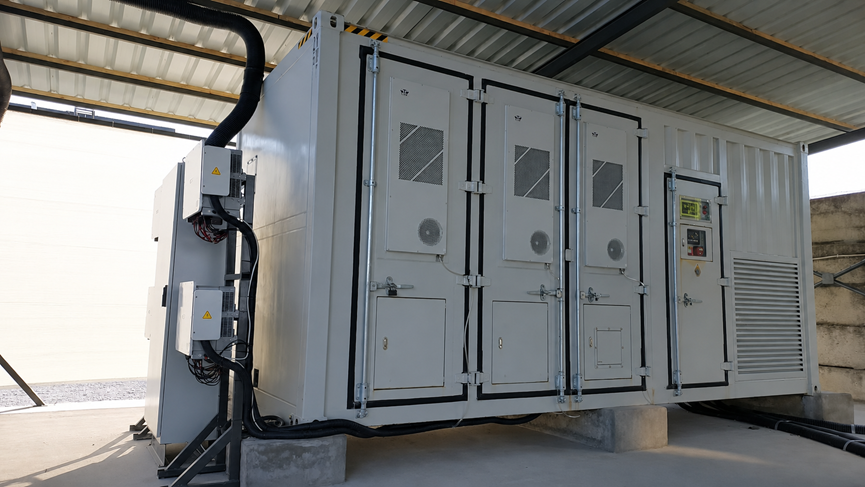
Automatic source handover requires equipment that can execute the intended sequence. In the GWTime 500 kW container family, the integrated arrangement includes power conversion, battery storage, control, a static transfer switch and protection switches. PV, grid and diesel inputs support different supply combinations, with load-priority, backup and peak-shaving functions available for the configured application.
The associated DC-coupled operating logic starts the diesel generator when prolonged low-solar conditions bring battery charge to the minimum threshold. The generator must still be matched to its rated power, minimum stable loading, controller behaviour, voltage and frequency limits, and permitted battery-charging power. An automatic start command is only one part of that coordinated operating sequence.
A generator assigned to recharge the battery must also be assessed against the load it serves at that time. Charging power and operating demand compete for the available output. Recovery plans that ignore this simultaneous duty can describe a charging rate that the installed generator cannot sustain in operation.
Electrical transfer and generator starting are also different events. A published transfer time cannot be treated as the time needed for a stopped engine to establish an acceptable supply. The handover assessment must retain the actual generator conditions and the battery duty during the transition, without assuming that a fast switching component removes every other delay.
Assigning Energy According to the Site’s Operating Objective
Load-first operation and battery-priority operation allocate available power differently. In the GWTime DC-coupled arrangement, load-first mode directs daytime PV to the load and stores surplus energy. Battery-priority mode instead initiates charging after a preset low charge threshold and continues until the target charge is recovered, using available sources such as solar or the grid.
Operating priorities give commercial energy storage systems distinct charging and discharging duties. A remote site waiting for generator support has different priorities from a grid-connected facility managing a planned discharge period. Neither operating pattern can be judged solely from the equipment’s nominal capacity, because source availability and the required reserve also influence the sequence.
Battery supervision in the GWTime container arrangement adds a separate operating boundary. Its graduated response progresses from a warning to inverter-level protection and then total-system shutdown. Those protective actions are distinct from normal source scheduling: a preferred dispatch sequence cannot override equipment protection merely to maintain an expected energy flow.
Across the day, useful coordination connects sunny-period supply, reserve use, charge recovery and the next available source. Each transition needs a stated condition and equipment capable of carrying out the intended action. The operating sequence follows the site’s changing energy resources and load, rather than a presumption that one fixed mix of solar, battery and diesel is always appropriate.